
Woodworking combines artistry, precision, and a deep connection to natural materials. Whether you're drawn to lathe work or furniture restoration, these foundational insights will help you embark on a fulfilling craft practice with confidence and safety.
Before acquiring tools or materials, developing the right mindset is essential for woodworking success. Patience stands as perhaps the most critical attribute for any aspiring woodworker—the willingness to proceed methodically, learning from each step and understanding that mastery emerges gradually through consistent practice and thoughtful reflection.
Cultivate an observational approach to your craft, noticing how wood grain influences tool behavior, how different species respond to cutting techniques, and how environmental factors affect your materials. This attentiveness transforms basic skill execution into true craftsmanship, where you anticipate how the wood will behave rather than merely reacting to it.
Embrace iterative learning by starting with smaller, simpler projects that build foundational skills before attempting complex pieces. Each project, regardless of size, presents opportunities to refine techniques and deepen your understanding of wood's properties. Document your process through notes or photographs, creating a personal reference that captures insights that textbooks often miss.
Remember that in woodworking, mistakes aren't failures but valuable learning experiences that often lead to creative solutions and unique design elements. This resilient mindset transforms challenges into opportunities for innovation and growth.

Begin with understanding wood properties, basic joinery, and reading grain direction before investing in equipment.
Master manual techniques first to develop sensitivity to wood behavior that will inform all future work.
Connect with experienced woodworkers through local clubs or online forums for guidance and inspiration.
Begin with achievable projects that build confidence and foundational skills before advancing to complex work.
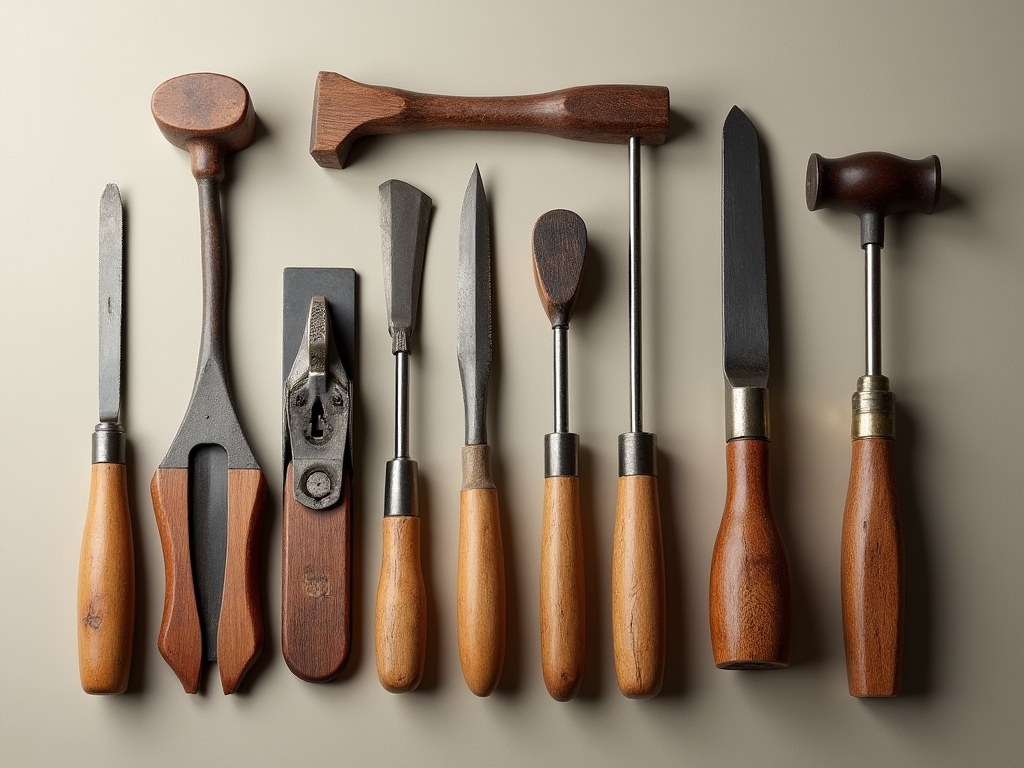
Quality hand tools form the backbone of any woodworker's arsenal, providing unparalleled control and connection to your material. While power tools may eventually speed your work, the tactile feedback and precision of hand tools develop fundamental skills that transfer across all woodworking disciplines.
Begin with a carefully curated selection rather than accumulating tools indiscriminately. Each addition should serve multiple functions and complement your existing toolkit. This thoughtful approach prevents unnecessary expenditure while ensuring you have exactly what you need for your specific woodworking interests.
Beginner's Tip: Accurate measurement and marking is the foundation of precision woodworking. Invest in quality tools here first.
Beginner's Tip: Learn to sharpen properly before extensive tool use. Sharp tools are safer and produce better results.
Beginner's Tip: Start with a mini-lathe before investing in a full-sized unit to develop fundamental skills.
For beginners, the vast price range of woodworking tools can be bewildering. While premium tools offer advantages in edge retention, precision, and comfort, they aren't always necessary for those just starting out. Consider a balanced approach where you invest in high-quality versions of frequently used tools while selecting mid-range options for less common applications.
When evaluating hand planes, chisels, and saws, focus on the quality of the steel rather than cosmetic features. Tools with high-carbon steel that can be honed to a razor edge will serve you better than those with elaborate handles but inferior cutting performance. Similarly, look for tools with simple, robust adjustment mechanisms that will maintain settings during use.
For beginners interested in lathe work, consider starting with a midi-lathe that offers versatility without overwhelming space requirements or budget. HSS (High-Speed Steel) turning tools provide an excellent balance of performance and value for those developing their skills before potentially moving to more specialized premium options.
Remember that vintage tools, when properly restored, often represent exceptional value. Many older hand planes, chisels, and saws were made with superior materials and craftsmanship compared to today's mid-range offerings, and can be acquired at reasonable prices from estate sales and online marketplaces.
Safety in woodworking isn't merely about avoiding accidents—it's about establishing comprehensive systems and habits that protect you throughout your woodworking journey. Developing these practices from the beginning is far easier than correcting unsafe habits later.
Your workshop layout should prioritize workflow and safety equally. Ensure adequate space around machinery (especially lathes) to prevent crowding during operation. Position tools to minimize awkward body positions during use, and create dedicated areas for different operations to prevent cross-contamination of processes like finishing and cutting.
Lighting deserves special attention—install bright, shadow-free illumination throughout your workspace, with supplementary task lighting for detail work. Proper visibility not only prevents accidents but also improves the quality of your craftsmanship by allowing you to see subtle details and potential issues.
Develop systematic tool storage practices where everything has a designated place. This organization prevents accidents from misplaced sharp tools and creates efficient workflows where you can focus on craftsmanship rather than searching for equipment.
Personal protective equipment forms your first line of defense against woodworking hazards. Invest in quality safety gear and develop the discipline to use it consistently, even for brief operations.
Safety glasses with side shields are the minimum for any woodworking task. Consider upgrading to a full face shield for lathe work, where larger debris can be ejected at high velocities.
A properly fitted dust mask rated N95 or higher is essential for any operation generating dust. For extended exposure or when working with exotic woods, consider a powered respirator system.
Earmuffs or earplugs rated for workshop noise levels protect against the cumulative damage of prolonged exposure to machinery. Consider electronic options that allow communication while blocking harmful noise.
Close-fitting garments without loose elements that could be caught in rotating machinery. Remove jewelry and secure long hair before operating any equipment.

The choice of wood dramatically influences both the process and outcome of your woodworking projects. As a beginner, selecting appropriate materials can make the difference between a frustrating experience and a rewarding one. Start with woods that are forgiving and responsive to hand tools while you develop your skills.
Pine offers an accessible entry point—it's inexpensive, widely available, and responds well to basic tools. Its softness makes it easy to work but also means it shows mistakes readily, providing immediate feedback on your technique. Consider it your practice material as you build fundamental skills.
As your confidence grows, transition to hardwoods like poplar or cherry. Poplar provides a step up in density without being prohibitively hard to work, while cherry offers beautiful color and grain that responds exceptionally well to hand tools, making it ideal for smaller projects where you can focus on precision.
Note: The percentages represent relative ease of working for beginners, not wood quality.
One of the most critical aspects of successful woodworking is anticipating and accommodating wood movement. Unlike static materials, wood continues to expand and contract with changes in humidity throughout its lifetime. This natural property must be incorporated into your design and construction approach.
Wood movement occurs primarily across the grain (tangentially and radially) with minimal change along the grain length. This differential movement creates particular challenges at joints and in panel construction. Beginners should master techniques that allow for this movement, such as:
Learning to read grain direction is equally important, as it affects both wood movement and workability. Observe how the annual rings intersect the board face and how medullary rays appear on quartersawn surfaces. This understanding will inform everything from joint design to finishing techniques.
A small box with basic joinery teaches fundamental skills in measuring, cutting, and assembly while producing a useful item. Focus on square corners and tight-fitting joints.
This project introduces wood selection, grain orientation, and glue-up techniques while creating a practical kitchen item that showcases the natural beauty of wood.
For those with lathe access, a small bowl introduces the fundamentals of turning while teaching tool control and developing an eye for form and proportion.
This project introduces mortise and tenon joinery in a small-scale furniture piece that combines strength requirements with design considerations.
Restoration projects offer unique educational opportunities for beginners, allowing you to study historical construction methods while developing practical skills. Starting with simple pieces like a small side table or basic chair provides invaluable insights into furniture construction while limiting complexity.
Begin by thoroughly documenting the piece before any work begins—photographs, measurements, and notes about construction details create a reference for reassembly and help you understand the original maker's intentions. This documentation process trains your eye to recognize quality construction techniques and design proportions.
Focus initially on conservation rather than extensive reconstruction. Learning to clean, stabilize, and make minimal repairs preserves the piece's history while building your confidence. As your skills develop, you can progress to more involved restoration work like veneer repair or joint reconstruction.
Each restoration project serves as a master class from craftspeople of the past. Pay attention to their joinery choices, wood selection, and problem-solving approaches. These insights from previous generations of woodworkers will inform and enhance your own original work as you progress in your woodworking journey.
The woodworking learning journey extends far beyond your workshop. A wealth of resources exists to supplement your hands-on experience with theoretical knowledge and inspiration from master craftspeople.
Numerous online platforms offer structured woodworking courses taught by experienced craftspeople. These resources allow you to learn specific techniques at your own pace while seeing demonstrations from multiple angles—an advantage over traditional in-person instruction.
Look for courses that emphasize fundamentals and provide detailed explanation rather than just demonstrating finished results. The best online instructors explain not just how to perform techniques but why specific approaches are used and how to recognize and correct common issues.
As your skills evolve, your workshop should grow alongside them. Rather than attempting to create a "complete" workshop immediately, develop your space incrementally based on the projects you undertake and the techniques you're currently mastering.
Basic hand tools, portable power tools, and a solid workbench with vises. Focus on developing core skills in a minimal but functional space.
Add equipment specific to your interests (lathe, specialized hand tools) while improving storage and work surfaces.
Incorporate stationary power tools that improve workflow, dedicated areas for different operations, and enhanced dust collection.
Refine your space with specialized tools for advanced techniques, optimized workflow, and personalized jigs and fixtures.
Connect with the broader woodworking community through local clubs, online forums, and social media groups. These connections provide not just knowledge but also opportunities for tool sharing, material sourcing, and collaborative projects that can accelerate your development as a craftsperson.
Consider mentorship opportunities where you can learn directly from experienced woodworkers. Many established craftspeople welcome the opportunity to pass on their knowledge to dedicated learners, offering insights that can't be found in books or videos.
Revesfa offers introductory workshops for beginners interested in exploring lathe work and furniture restoration. Our experienced instructors provide hands-on guidance in a supportive environment with all tools and materials provided.
Inquire About Workshops